

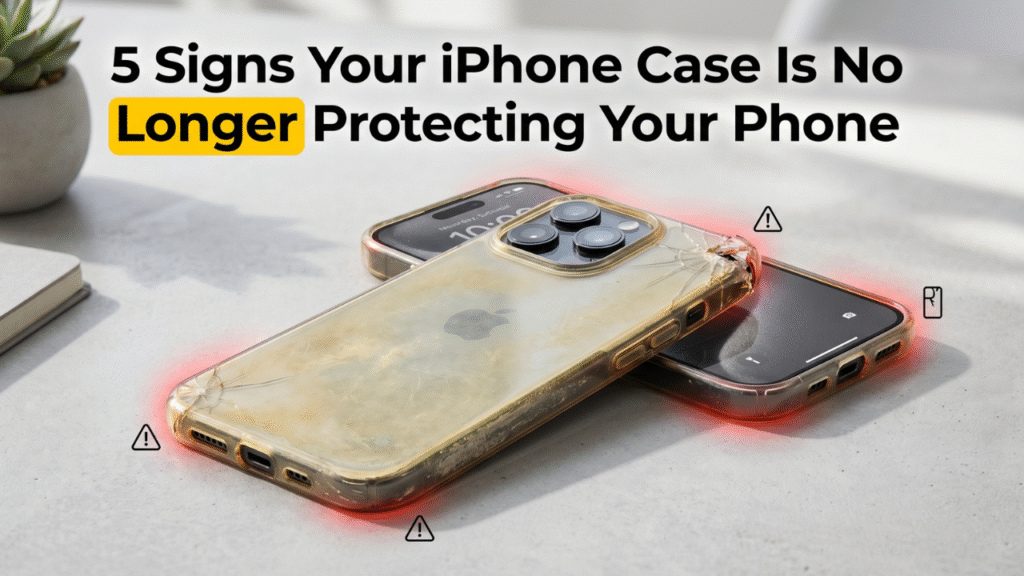
Your iPhone goes everywhere with you whether it’s work, travel, cafes, meetings, the gym, or daily commutes. That’s exactly why your phone case plays such an important role.
An iPhone case is not just about style. Its real purpose is to protect your phone from accidental drops, scratches, and impact damage.
However, even a high-quality case can lose its protective ability over time.
The tricky part is that the warning signs are not always obvious.
A case may still look fine from a distance, but it may no longer be giving your iPhone the protection it needs.
If you’re wondering whether it’s time to replace your current case, here are five clear signs your iPhone case is no longer protecting your phone properly.
Quick Answer: How Do You Know If Your iPhone Case Needs Replacing?
If your iPhone case has cracked corners, a loose fit, flattened raised edges, hardened material, or a slippery grip, it may no longer protect your phone properly and should be replaced.
This helps prevent screen cracks, scratches, and damage from accidental drops.
1) The Corners Are Cracked or Worn Out
The corners of a phone case absorb the maximum impact during accidental drops.
This is where most of the shock protection is built.
If you notice any of the following, it’s a serious warning sign:
- cracked corners
- broken corner guards
- compressed air-cushion edges
- worn-out shockproof bumpers
Once the corners are damaged, the case can no longer absorb impact effectively.
This means even a small drop may directly affect your iPhone’s frame or screen.
For daily use, corner protection is one of the most important safety features.
2) The Case No Longer Fits Tightly
A protective case should fit your iPhone securely.
If the phone moves inside the case or the sides feel loose, the protection level drops significantly.
Watch for signs such as:
- loose side buttons
- open gaps around the edges
- the phone slightly shifting inside the case
- the case slipping off too easily
A loose-fitting case cannot protect your phone properly during a fall.
Instead of absorbing impact, it may come off completely during the drop.
That defeats the entire purpose of using a case.
Imagine pulling your phone out of your pocket or placing it on a cafe table if the case already feels loose, the risk of accidental damage increases.
3) The Raised Edges Have Flattened
Raised edges are designed to keep your screen and camera lenses away from flat surfaces.
This helps protect against:
- screen scratches
- cracked glass
- camera lens damage
Over time, daily use can flatten these edges.
If your phone screen or camera sits almost level with the case, it’s a clear sign that protection has reduced.
This becomes especially risky when placing your phone face down on desks, tables, or rough surfaces.
4) The Material Has Hardened or Turned Yellow
This issue is most common in clear TPU and silicone cases.
With daily use, exposure to sunlight, heat, sweat, and dust can cause the material to:
- turn yellow
- lose flexibility
- become stiff
- develop micro-cracks
A hardened case may still look usable, but it loses its ability to absorb shock.
Flexible materials protect better because they cushion impact.
Once the material becomes rigid, your phone becomes more vulnerable to damage.
5) The Grip Feels Slippery
Protection is not only about surviving drops.
It’s also about preventing drops in the first place.
A good iPhone case should offer a secure and comfortable grip.
If your case feels smooth, worn, or slippery, the chances of accidental drops increase.
Common signs include:
- worn side texture
- faded matte coating
- smooth back surface
- peeling grip pattern
A secure grip is one of the most practical features for everyday use.
Better grip means fewer accidental slips.
Quick Comparison: Is Your Case Still Protective?
Warning Sign | Risk Level | Replace It? |
Cracked corners | High | Yes |
Loose fit | High | Yes |
Flattened raised edges | High | Yes |
Hardened or yellow material | Medium | Recommended |
Slippery grip | Medium | Recommended |
How Often Should You Replace an iPhone Case?
A good-quality iPhone case usually lasts between 12 to 24 months, depending on how often you use your phone and the type of case material.
However, you should replace it sooner if you notice:
- visible cracks
- worn edges
- poor grip
- looseness
- yellowing or hardening
For most daily users, replacing the case every 12 to 18 months is ideal for consistent protection.
Best Type of Case for Long-Term Protection
If you want reliable long-term protection, choose a case with:
- raised screen edges
- reinforced corners
- shockproof TPU sides
- anti-yellow materials
- anti-slip grip texture
- MagSafe compatibility
These features help maintain protection even with daily use.
A premium-quality case from Aqvica is designed to offer both durability and style, so your iPhone stays protected without compromising on looks. https://www.aqvica.com/iphone-cases/
FAQs
How do I know if my iPhone case needs replacing?
Replace your iPhone case if it has cracked corners, loose edges, flattened bezels, yellowing, or poor grip, as these reduce drop protection.
Do yellow clear cases still protect the phone?
Yes, but only if the material is still flexible. Once it hardens, becomes stiff, or develops cracks, the protection level drops.
Can an old case damage my iPhone?
Yes. A worn-out case can increase the risk of scratches, impact damage, and accidental slips, especially if it no longer fits securely.
Final Verdict
Your iPhone case is your phone’s first line of defense.
If you notice any of these five warning signs, it may be time to replace it before a small drop turns into expensive damage.
A good case should provide:
- strong grip
- raised edge protection
- secure fit
- impact resistance
If your current case no longer offers these features, upgrading to a durable protective case from Aqvica can help keep your iPhone safe every day. https://www.aqvica.com/